
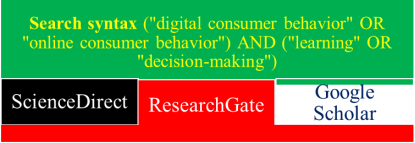
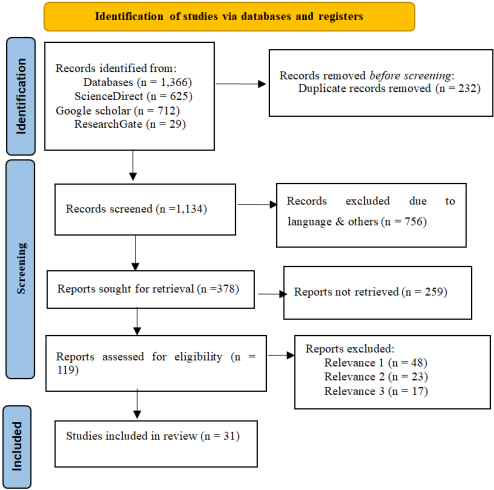
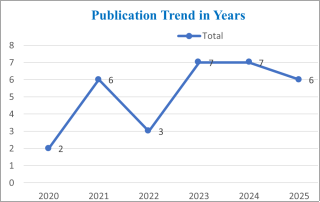
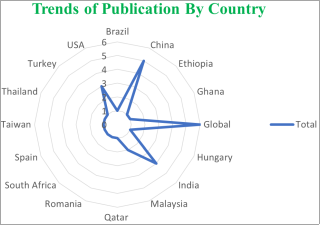
Purpose: This study investigates the key determinants of digital consumer habits during the swift expansion of AI-driven platforms and social commerce between 2020 and 2025. It examines how internal psychological factors, external socio-technological influences, learning processes and innovation adoption jointly shapes online purchase decisions. As digital ecosystems increasingly integrate artificial intelligence, personalization and algorithmic recommendations, understanding these multidimensional drivers become essential for explaining how consumers form. Maintain and modify habitual online behaviors Methods: A Systematic Literature Review was conducted following PRISMA guidelines. A total of 31 peer reviewed articles published between 2020 to 2025 were identified through ScienceDirect, Google Scholar and ResearchGate. Descriptive analysis mapped publication trends, geographical distribution, methodological preferences and underlying theoretical Models. Thematic synthesis was applied to extract and integrate the main determination of digital consumer habits across technological, psychological and social domain. Findings: The shows a steady global rise in research on digital consumer habits with Asian studies focusing largely on personalization, livestream commerce and AI -mediated engagement, while western studies emphasize privacy concerns, data ethics and trust. Across contexts, trust, perceived usefulness, social influence and platform usability emerged as the most consistent predictors of behavioral intention. In addition, repeated interaction, positive reinforcement, familiarity with platform features and social learning processes significantly increased consumer confidence, technology adoption likelihood and long-term loyalty. Contributions: The study offers an integrated framework that connects internal cognition, external digital ecosystems and consumer learning processes to explain the formation of digital consumption habits. It advances theoretical understanding by linking and extending TAM, TPB, DOI and S-O-R models to better capture user behavior within AI-enhanced digital environments.
| Published in | International and Public Affairs (Volume 9, Issue 2) |
| DOI | 10.11648/j.ipa.20250902.12 |
| Page(s) | 59-70 |
| Creative Commons |
This is an Open Access article, distributed under the terms of the Creative Commons Attribution 4.0 International License (http://creativecommons.org/licenses/by/4.0/), which permits unrestricted use, distribution and reproduction in any medium or format, provided the original work is properly cited. |
| Copyright |
Copyright © The Author(s), 2025. Published by Science Publishing Group |
Digital Consumer Behavior, Social Commerce, Artificial Intelligence
Inclusion | Exclusion |
|---|---|
Studies Focused consumer habits in digital, online or technological mediated context | The studies on focus on offline consumer behavior |
The studies examined internal or external influences, consumer learning, decision making and innovation | Non-English research |
The empirical or theoretical studies published in peer reviewed journal | Non-peer review sources, book chapters, conference and unpublished thesis |
The studies published between 2020 and 2025 | The studies that has lack of quality and limited relevance to the research question |
TPB | Theory of Planned Behavior |
TAM | Technology Acceptance Model |
DOI | Diffusion of Innovations Theory |
S-O-R | Stimulus- Organism-Responsible Framework |
UTAUT | Unified Theory of Acceptance and Use of Technology |
| [1] | Aaker, D. (2023). Branding: Too often overlooked in disruptive innovation and social purpose arenas. Journal of Brand Management, 30, 185–189. |
| [2] | Ahmed, U., & Hashim, S. (2022). Sustainable brand management: The role of internal brand management and intrinsic motivation in building employee’s brand relationship quality towards organization’s brand. Sustainability, 14(24), 16660. |
| [3] | Ajzen, I. (1991). The theory of planned behavior. Organizational Behavior and Human Decision Processes, 50(2), 179–211. |
| [4] | Akram, U., Ansari, A. R., & Fu, G. (2023). Integrating internal and external factors of online consumer behavior: A meta-analytic review. Journal of Retailing and Consumer Services, 74, 103441. |
| [5] | Al-Swidi, A., Gelaidan, H. M., & Saleh, R. M. (2021). The influence of attitudes and perceived behavioural control on online purchase intentions: An extension of the theory of planned behaviour. Journal of Retailing and Consumer Services, 59, 102414. |
| [6] | Angelo, C., Mariangela, L., Manuela, M., & Lorenzo, Q. (2018). Innovating performing arts management through a product lifecycle management approach. In IFIP Advances in Information and Communication Technology (Vol. 540). Springer International Publishing. |
| [7] | Anirvinna, C., Jha, D., Goodwin, R. D., & Pokhriyal, D. (2025). Consumer willingness to adopt digital coupons in post-demonetization and COVID-19 in India. Innovative Marketing, 21(1), 157-169. |
| [8] | Appel, G., Grewal, L., Hadi, R., & Stephen, A. T. (2020). The future of social media in marketing. Journal of the Academy of Marketing Science, 48(1), 79–95. |
| [9] | Awad, A. (2024). Artificial Intelligence and Marketing Innovation: The Mediating Role of Organizational Culture. Innovative Marketing, 20(3), 170–181. |
| [10] | Barney, J. (1991). Firm resources and sustained competitive advantage. Journal of Management, 17(1), 99–120. |
| [11] | Baumgarth, C. (2010). “Living the brand”: Brand orientation in the business-to-business sector. European Journal of Marketing, 44(5), 653–671. |
| [12] | Beverland, M. B., Napoli, J., & Yakimova, R. (2007). Branding the business marketing offer: Exploring brand attributes in business markets. Journal of Business Research, 60(4), 394–403. |
| [13] | Boso, N., Story, V. M., & Cadogan, J. W. (2019). Entrepreneurial orientation, market orientation, network ties, and performance: Study of African firms. Journal of Business Research, 101, 268–279. |
| [14] | Branstad, A. and Solem, B. A. (2020), "Emerging theories of consumer-driven market innovation, adoption, and diffusion: A selective review of consumer-oriented studies", Journal of Business Research, Vol. 116 No. pp. 561-571. |
| [15] | Breznik, L., & Duh, M. (2015). Dynamic capabilities and competitive advantage: Findings from case studies. Management: Journal of Contemporary Management Issues, 20(2), 167–185. |
| [16] | Calantone, R. J., & Griffith, D. A. (2007). Innovation processes in global markets: Cross-national and cross-cultural research perspectives. Journal of International Marketing, 15(4), 1–5. |
| [17] | Calder, B. J., Malthouse, E. C. and Maslowska, E. (2016), "Brand marketing, big data and social innovation as future research directions for engagement", Journal of Marketing Management, Vol. 32 No. 5-6, pp. 579-585. |
| [18] | Campagna, J. M. & Bhada, S. V. (2024). Strategic Adoption of Digital Innovations Leading to Digital Transformation: A Literature Review and Discussion. |
| [19] | Campo Elías López-Rodríguez, et al. (2024). Resistance to technological innovation and brand equity in the banking sector. Management & Marketing, 19(1), 93-112. |
| [20] | Chang, Y., Yu, H., & Lu, R. (2022). Exploring digital transformation’s impact on brand innovation: A systematic review. Technological Forecasting and Social Change, 182, 121835. |
| [21] | Chatterjee, S., Rana, N. P., Tamilmani, K., & Sharma, A. (2023). Examining trust in AI-enabled services: A systematic review. Technological Forecasting and Social Change, 190, 122345. |
| [22] | Chong, A. Y. L., Li, B., Ngai, E. W. T., & Ch’ng, E. (2023). Diffusion of digital innovations in consumer markets: Revisiting Rogers in the AI era. Information & Management, 60(3), 103745. |
| [23] | Cid, A., Blanchet, P., Robichaud, F., & Kinuani, N. (2022). A conceptual framework for creating brand management strategies. Businesses, 2(4), 546–561. |
| [24] | Davis, F. D. (1989). Perceived usefulness, perceived ease of use, and user acceptance of information technology. MIS Quarterly, 13(3), 319–340. |
| [25] | Delre, S. A., Broekhuizen, T. L. and Bijmolt, T. H. (2016), "The effects of shared consumption on product life cycles and advertising effectiveness: the case of the motion picture market", Journal of Marketing Research, Vol. 53 No. 4, pp. 608-627. |
| [26] | Desmarchelier et al., 2025 B. Desmarchelier, F. Djellal, F. Gallouj Innovation in libraries: a service-oriented perspective Res. Policy, 54(1) (2025), p. 105110. |
| [27] | Djellal, 2023F. Djellal, The reverse product cycle model (Barras). |
| [28] | Dwivedi, Y. K., Ismagilova, E., Hughes, D. L., Carlson, J., Filieri, R., Jacobson, J., & Jain, V. (2021). Setting the future research agenda for digital and social media marketing. International Journal of Information Management, 59, 102168. |
| [29] | Elezaj, S., Ramaj, V., & Elezaj, R. (2023). The role of innovation and branding on enterprise sales growth in transition countries. Academic Journal of Interdisciplinary Studies, 12(3), 123. |
| [30] | Ewa, W.-J., Milosz, P., Martyna, K., & Michal, N. (2017). Apple Products: A Discussion of the Product Life Cycle. 31(Msmi), 159–164. |
| [31] | Gough, D., Oliver, S., & Thomas, J. (2012). An introduction to systematic reviews. Sage Publications. |
| [32] | Gursoy, D., Chi, C. G., Lu, L., & Nunkoo, R. (2022). Consumers’ acceptance of artificially intelligent (AI) device use in service delivery. International Journal of Hospitality Management, 102, 103153. |
| [33] | Hanaysha, J. (2016). Product innovation and brand equity: Empirical relationship in business & management context. American Journal of Economics and Business Administration, 8(1), 35–43. |
| [34] | Hidayatno, A., & Rahman, I. (2016). Understanding the Dynamics of 6P Branding Strategy with Brand Equity for a Mature Customer-Goods Brand using a System Dynamics Model Understanding the Dynamics of 6P Branding Strategy with Brand Equity for a Mature Customer-Goods Brand using a System Dynamics Model. June 2013. |
| [35] | Hossain, K., Che Abdullah, A. S., & others (2023). The Impact of Product Innovation Attributes on Brand Equity. Journal of Islamic Accounting and Business Research, 7, 1053–1071. |
| [36] | Mesjasz-Lech, A. (2023). Can Industry 5.0 be seen as a remedy for the problem of western in industrial companies? Procedia Computer Science, 225, 1816-1825. |
| [37] | Iglesias, O., Ind, N., & Alfaro, M. (2013). The organic view of the brand: A brand value co-creation model. Journal of Brand Management, 20(8), 670–688. |
| [38] | Kamal Hossain, A. S. Che Abdullah, F. M. Balwi, A. Lubis, N. Azlinna Azizan, & Mohammad Nurul Alam. (2023). The Impact of Product Innovation Attributes on Brand Equity. Journal of Islamic Accounting and Business Research, 7(?). |
| [39] | Kannan, P. K. (2023). Digital marketing and AI: The evolving landscape of consumer engagement. International Journal of Research in Marketing, 40(3), 567–582. |
| [40] | Kapitan, S., & Silvera, D. H. (2022). From influencers to micro-movements: Social media and consumer identity formation. Journal of Consumer Behaviour, 21(5), 1008–1022. |
| [41] | Keller, K. L. (1993). Conceptualizing, measuring, and managing customer-based brand equity. Journal of Marketing, 57(1), 1–22. |
| [42] | Keller, K. L., & Lehmann, D. R. (2006). Brands and branding: Research findings and future priorities. Marketing Science, 25(6), 740–759. |
| [43] | Kim, J., Choe, Y., & Lee, S. (2023). Digital sustainability and consumer purchase intentions: Evidence from online retailing. Sustainability, 15(2), 1349. |
| [44] | Kumar, V., & Tan, Y. L. (2022). Mapping digital consumer decision-making: A framework for AI-driven marketing. Journal of Business Research, 145, 112–125. |
| [45] | Kundu, S., & Bose, S. (2023). Integrating innovation and branding: A resource-based perspective. European Journal of Innovation Management, 26(4), 950–972. |
| [46] | Laukkanen, T., Sinkovics, N., & Sinkovics, R. R. (2021). Diffusion of digital innovation in global markets: An integrative review. International Business Review, 30(6), 101869. |
| [47] | Lemmens, A., Croux, C. and Stremersch, S. (2012), "Dynamics in the international market segmentation of new product growth", International Journal of Research in Marketing, Vol. 29 No. 1, pp. 81-92. |
| [48] | Leroi-Werelds, S. (2022). The S-O-R model in online consumer research: A review and research agenda. Journal of Business Research, 146, 318–333. |
| [49] | Levitt, T. (1965). Exploit the product life cycle. Harvard Business Review, 43(6), 81–94. |
| [50] | López, C., & Esteves, F. (2021). Digital transformation and business model innovation: The role of consumer behavior. Journal of Business Research, 134, 102–113. |
| [51] | Makino, H. & Kobayashi, M. (2025). Product design and development process toward long-selling brands. Quarterly Journal of Marketing, Article ID 2025.033. |
| [52] | Martínez, P., & Rodríguez del Bosque, I. (2013). CSR and customer loyalty: The roles of trust, customer identification with the company, and satisfaction. International Journal of Hospitality Management, 35, 89–99. |
| [53] | Mashudi & Fauziah, L. (2024). The role of knowledge management in enhancing product innovation: An empirical study of the creative industry in Indonesia. Branding: Jurnal Manajemen dan Bisnis, 3(2), 15-28. |
| [54] | Mathew, M. J. (2024). Literature search in systematic reviews: How much is good enough? Clinical Epidemiology and Global Health, 25(December 2023), 101485. |
| [55] | Mehrabian, A., & Russell, J. A. (1974). An approach to environmental psychology. MIT Press. |
| [56] | Moher, D., Liberati, A., Tetzlaff, J., & Altman, D. G. (2009). Preferred Reporting Items for Systematic Reviews and Meta-Analyses: The PRISMA statement. PLoS Medicine, 6(7), e1000097. |
| [57] | Moroza, N., & Jurgelane-Kaldava, I. (2019). Development and Location of Logistics Centres: A Systematic Review of Literature. Economics and Business, 33(1), 264–272. |
| [58] | Nazmi & Anakkathil Anil, M. (2023). Digital consumer behaviour: insights into the perceptions of late adolescents’ consumption of digital media on cognitive health. |
| [59] | Nguyen, B., Simkin, L., & Canhoto, A. (2022). The dark side of personalization: When consumers resist AI. Computers in Human Behavior, 133, 107311. |
| [60] |
Octavia, J., Witono, A. B. M., & Kurniawan, D. (n.d.). The effect of product innovation towards brand image and its implication on consumer buying behavior (a case of Toshiba television in Jakarta). International Journal of Family Business Practices. Retrieved from
https://e-journal.president.ac.id/index.php/IJFBP/article/view/1495 |
| [61] | OECD. (2024). E-commerce in the global economy 2024 report. OECD Publishing. |
| [62] | Page, M. J., McKenzie, J. E., Bossuyt, P. M., Boutron, I., Hoffmann, T. C., Mulrow, C. D., Shamseer, L., Tetzlaff, J. M., Akl, E. A., Brennan, S. E., Chou, R., Glanville, J., Grimshaw, J. M., Hróbjartsson, A., Lalu, M. M., Li, T., Loder, E. W., Mayo-Wilson, E., McDonald, S., … Moher, D. (2021). The PRISMA 2020 statement: An updated guideline for reporting systematic reviews. International Journal of Surgery, 88 (March). |
| [63] | Paul, J., & Criado, A. R. (2020). The art of writing literature review: What do we know and what do we need to know? International Business Review, 29(4). |
| [64] | Pellack, 2022, L. Pellack Academic library innovation: a selective review Libr. Leadersh. Manag., 36(3) (2022), pp. 1-19 Google Scholar. |
| [65] | Pereira, R. F., Ramos, I. L., & Smith, J. A. (2014). Transparency and rigor in systematic literature reviews: Methodological advances and challenges. Research Synthesis Methods, 5(3), 174–182. |
| [66] | Petticrew, M., & Roberts, H. (2019). Systematic reviews in the social sciences: A practical guide. John Wiley & Sons. |
| [67] | Pezeshkan, A., Fainshmidt, S., Nair, A., Frazier, M. L., & Markowski, E. (2016). An empirical assessment of the dynamic capabilities–performance relationship. Journal of Business Research, 69(8), 2950–2956. |
| [68] | Poonsawat, C. (2023). Building a successful branding in the digital era. Interdisciplinary Academic and Research Journal, 3(6), 141-152. |
| [69] | Pouyan, S., Ghasemaghaei, M., & Hassanein, K. (2022). Understanding consumer engagement in social media : The role of product lifecycle. Decision Support Systems, 162(August 2021), 113707. |
| [70] | Purchase, S., & Volery, T. (2020). Marketing innovation: A systematic review. Journal of Marketing Management, 36(9–10), 763–793. |
| [71] | Qiao, Y., Yin, X., & Gao, X. (2022). Impact of Perceived Product Value on Customer-Based Brand Equity: Marx’s Theory – Value-Based Perspective. Frontiers in Psychology, 13. |
| [72] | Rahman, H., Santosa, S., & Kurniawan, I. (2024). Product innovation and digital marketing strategies: Key to small business success in the creative economy era. Jurnal Kewirausahaan dan Bisnis. |
| [73] | Rogers, E. M. (2003). Diffusion of innovations (5th ed.). Free Press. |
| [74] | S. Nambisan, K. Lyytinen, A. Majchrzak, M. Song Digital innovation management MIS Q., 41(1) (2017), pp. 223-238, |
| [75] | Sena, V., Karim, M., & Özdemir, S. (2025). Do brands boost the impact of patents on innovation? Industrial Marketing Management, forthcoming. |
| [76] | Seo, H. J., & Kim, K. U. (2012). Quality assessment of systematic reviews or meta-analyses of nursing interventions conducted by Korean reviewers. BMC Medical Research Methodology, 12. |
| [77] | Shareef, M. A., Baabdullah, A. M., Dutta, S., & Kumar, V. (2022). Examining consumer trust and risk in AI-based commerce through the technology acceptance lens. Computers in Human Behavior, 135, 107374. |
| [78] | Slotegraaf, R. J., & Pauwels, K. (2008). The impact of brand equity and innovation on the long-term effectiveness of promotions. Journal of Marketing Research, 45(3), 293–306. |
| [79] | Snyder, H. (2019). Literature review as a research methodology: An overview and guidelines. Journal of Business Research, 104(July), 333–339. |
| [80] | Sohaib, M., Mlynarski, J., & Wu, R. (2023). Building Brand Equity: The Impact of Brand Experience, Brand Love, and Brand Engagement—A Case Study of Customers’ Perception of the Apple Brand in China. Sustainability, 15(1), 746. |
| [81] | Song, M., Zhao, S., & Di Benedetto, C. A. (2020). Strategic synergy between marketing and R&D for innovation success: A meta-analysis. Journal of Product Innovation Management, 37(3), 233–257. |
| [82] | Srivastav, S. K., Habil, M. & Thakur, P. (2025). Evaluating the Effects of Artificial Intelligence and Digital Marketing on Consumer Behaviour: A Bibliometric Approach. Golden Ratio of Marketing and Applied Psychology of Business, 5(2), 517-538. |
| [83] | Sudirjo, F., Yoga, T., & Mujib, H. (2024). The effect of green branding, relational marketing, and product innovation on perceived customer value in the West Java tourism industry. West Science Interdisciplinary Studies, 2(06), 1257-1268. |
| [84] | Sukomardojo, T., Anwar, F., & Djalipa, D. (2023). Creative Economy Branding: Conquering Markets through Innovation and Brand Excellence. Branding: Jurnal Manajemen dan Bisnis, 2(1). |
| [85] | Tang, W. C. (2023). Integration of Brand Management and Marketing Strategy: A Core Path to Building Sustainable Competitive Advantage. Brand Strategy Quarterly. |
| [86] | Teece, D. J. (2018). Business models and dynamic capabilities. Long Range Planning, 51(1), 40–49. |
| [87] | Tellis, G. J., Yin, E., & Bell, S. (2009). Global consumer innovativeness: Cross-country differences and demographic commonalities. Journal of International Marketing, 17(2), 1–22. |
| [88] | Tranfield, D., Denyer, D., & Smart, P. (2003). Towards a methodology for developing evidence‐informed management knowledge by means of systematic review. British Journal of Management, 14(3), 207–222. |
| [89] | Urde, M. (1999). Brand orientation: A mindset for building brands into strategic resources. Journal of Marketing Management, 15(1–3), 117–133. |
| [90] | Van den Bulte, C. and Joshi, Y. (2007), “New Product Diffusion with Influentials and Imitators”, Marketing Science, Vol. 26 No. 3, pp. 40-63. |
| [91] | Velykytė, G. (2023). Creativity in distinctive brand assets. Creativity Studies, 16(2), 384-396. |
| [92] | Webster, J., & Watson, R. T. (2002). Analyzing the past to prepare for the future: Writing a literature review. MIS Quarterly, 26(2), xiii–xxiii. |
| [93] | Wilkof, N. (2018). Branding, co-branding and innovation: Expectations and limitations. Journal of Intellectual Property Law & Practice, 13(8), 611–624. |
| [94] | Wong, H. Y., & Merrilees, B. (2008). The performance benefits of being brand-oriented. Journal of Product & Brand Management, 17(6), 372–383. |
| [95] | Xuemin, Y., Legino, R., & Xiao, P. (2023). Innovation on cultural and creative product–Designing traditional Chinese poetry into product. Environment-Behaviour Proceedings Journal, 8(SI16), 129-137. |
| [96] | Yang, M., & Wang, M. (2024). Brand innovativeness and brand equity: The mediating role of brand attitude and the moderating role of perceived brand ethicality. Journal of Product & Brand Management, 33(7), 888–901. |
| [97] | Yiyun, L. (2025). Innovation Trends and Commercialization Strategies in Sports Brand Marketing under Globalization and Digital Transformation. Advances in Economics, Management and Political Sciences, 165. |
| [98] | Yonandia Febriyani, Suadi Sapta Putra, & Kumba Digdowiseiso. (2023). The influence of brand image, product innovation and brand trust on the competitiveness of Wardah cosmetic products on students of the National University of Jakarta. Jurnal Ekonomi, 12(04), 2325-2340. |
| [99] | Yusupova, R. I. & Zaripova, R. S. (2025). The Impact of Digital Innovation on Consumer Behaviour. (UDC 330.16: 004) |
| [100] | Zafar, A. U., Qiu, J., Shahzad, M., & Shen, J. (2021). The impact of social media on consumer behavior: A meta-analytic review. Telematics and Informatics, 57, 101505. |
| [101] | Zhang, M., & Benyoucef, M. (2021). Consumer behavior in social commerce: A literature review and future research agenda. Electronic Commerce Research and Applications, 49, 101098. |
| [102] | Zhao, X., Wang, L., & Sun, Y. (2022). Applying the S-O-R framework to understand the impact of social media advertising on purchase intention. Journal of Retailing and Consumer Services, 65, 102873. |
APA Style
Degefa, E. S., Werke, S. Z. (2025). Consumer Behavior in the Digital Era: A Systematic Literature Review of Internal and External Influences, Learning and Decision-making Dynamics. International and Public Affairs, 9(2), 59-70. https://doi.org/10.11648/j.ipa.20250902.12
ACS Style
Degefa, E. S.; Werke, S. Z. Consumer Behavior in the Digital Era: A Systematic Literature Review of Internal and External Influences, Learning and Decision-making Dynamics. Int. Public Aff. 2025, 9(2), 59-70. doi: 10.11648/j.ipa.20250902.12
AMA Style
Degefa ES, Werke SZ. Consumer Behavior in the Digital Era: A Systematic Literature Review of Internal and External Influences, Learning and Decision-making Dynamics. Int Public Aff. 2025;9(2):59-70. doi: 10.11648/j.ipa.20250902.12
@article{10.11648/j.ipa.20250902.12,
  author = {Elias Susi Degefa and Shimels Zewdie Werke},
  title = {Consumer Behavior in the Digital Era: A Systematic Literature Review of Internal and External Influences, Learning and Decision-making Dynamics},
  journal = {International and Public Affairs},
  volume = {9},
  number = {2},
  pages = {59-70},
  doi = {10.11648/j.ipa.20250902.12},
  url = {https://doi.org/10.11648/j.ipa.20250902.12},
  eprint = {https://article.sciencepublishinggroup.com/pdf/10.11648.j.ipa.20250902.12},
  abstract = {Purpose: This study investigates the key determinants of digital consumer habits during the swift expansion of AI-driven platforms and social commerce between 2020 and 2025. It examines how internal psychological factors, external socio-technological influences, learning processes and innovation adoption jointly shapes online purchase decisions. As digital ecosystems increasingly integrate artificial intelligence, personalization and algorithmic recommendations, understanding these multidimensional drivers become essential for explaining how consumers form. Maintain and modify habitual online behaviors Methods: A Systematic Literature Review was conducted following PRISMA guidelines. A total of 31 peer reviewed articles published between 2020 to 2025 were identified through ScienceDirect, Google Scholar and ResearchGate. Descriptive analysis mapped publication trends, geographical distribution, methodological preferences and underlying theoretical Models. Thematic synthesis was applied to extract and integrate the main determination of digital consumer habits across technological, psychological and social domain. Findings: The shows a steady global rise in research on digital consumer habits with Asian studies focusing largely on personalization, livestream commerce and AI -mediated engagement, while western studies emphasize privacy concerns, data ethics and trust. Across contexts, trust, perceived usefulness, social influence and platform usability emerged as the most consistent predictors of behavioral intention. In addition, repeated interaction, positive reinforcement, familiarity with platform features and social learning processes significantly increased consumer confidence, technology adoption likelihood and long-term loyalty. Contributions: The study offers an integrated framework that connects internal cognition, external digital ecosystems and consumer learning processes to explain the formation of digital consumption habits. It advances theoretical understanding by linking and extending TAM, TPB, DOI and S-O-R models to better capture user behavior within AI-enhanced digital environments.},
 year = {2025}
}
TY  - JOUR
T1  - Consumer Behavior in the Digital Era: A Systematic Literature Review of Internal and External Influences, Learning and Decision-making Dynamics
AU  - Elias Susi Degefa
AU  - Shimels Zewdie Werke
Y1  - 2025/12/11
PY  - 2025
N1  - https://doi.org/10.11648/j.ipa.20250902.12
DO  - 10.11648/j.ipa.20250902.12
T2  - International and Public Affairs
JF  - International and Public Affairs
JO  - International and Public Affairs
SP  - 59
EP  - 70
PB  - Science Publishing Group
SN  - 2640-4192
UR  - https://doi.org/10.11648/j.ipa.20250902.12
AB  - Purpose: This study investigates the key determinants of digital consumer habits during the swift expansion of AI-driven platforms and social commerce between 2020 and 2025. It examines how internal psychological factors, external socio-technological influences, learning processes and innovation adoption jointly shapes online purchase decisions. As digital ecosystems increasingly integrate artificial intelligence, personalization and algorithmic recommendations, understanding these multidimensional drivers become essential for explaining how consumers form. Maintain and modify habitual online behaviors Methods: A Systematic Literature Review was conducted following PRISMA guidelines. A total of 31 peer reviewed articles published between 2020 to 2025 were identified through ScienceDirect, Google Scholar and ResearchGate. Descriptive analysis mapped publication trends, geographical distribution, methodological preferences and underlying theoretical Models. Thematic synthesis was applied to extract and integrate the main determination of digital consumer habits across technological, psychological and social domain. Findings: The shows a steady global rise in research on digital consumer habits with Asian studies focusing largely on personalization, livestream commerce and AI -mediated engagement, while western studies emphasize privacy concerns, data ethics and trust. Across contexts, trust, perceived usefulness, social influence and platform usability emerged as the most consistent predictors of behavioral intention. In addition, repeated interaction, positive reinforcement, familiarity with platform features and social learning processes significantly increased consumer confidence, technology adoption likelihood and long-term loyalty. Contributions: The study offers an integrated framework that connects internal cognition, external digital ecosystems and consumer learning processes to explain the formation of digital consumption habits. It advances theoretical understanding by linking and extending TAM, TPB, DOI and S-O-R models to better capture user behavior within AI-enhanced digital environments.
VL  - 9
IS  - 2
ER  -
Department of Management, Jimma University, Jmma, Ethiopia
Department of Management, Jimma University, Jmma, Ethiopia




 Share This Article
 Twitter
 Linked In
 Facebook
 Copy
Copy Download